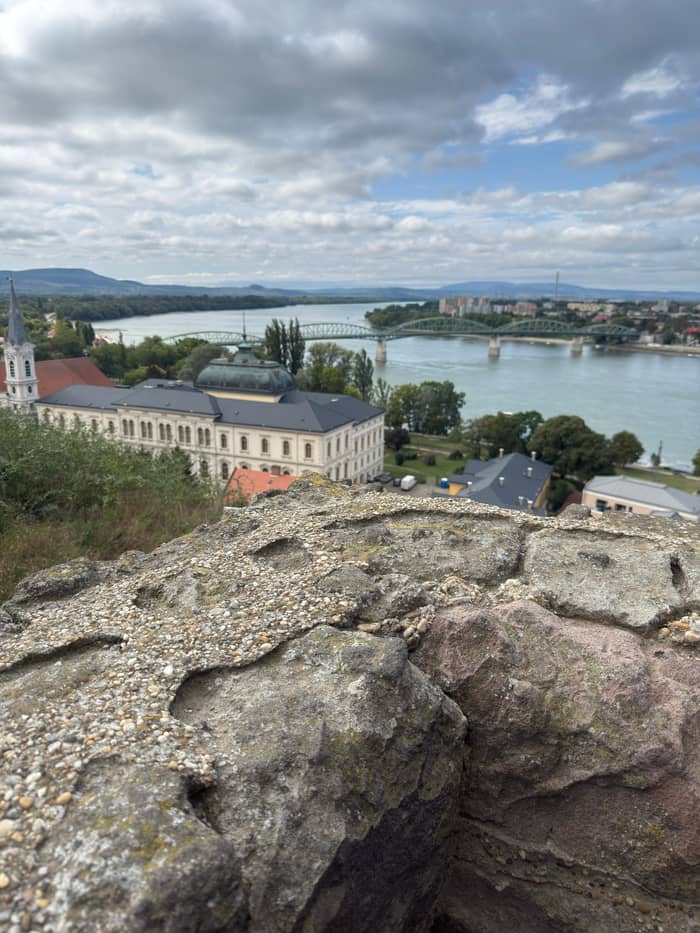
Site tour
Full Bend day
Esztergom, Visegrád, Szentendre
- Length9.5 hours
- In Szentendre80 minutes
- Lunch3 courses in Visegrád
Choose your stop
Check out 39 stops
Start by picking a route; tap a pin or stop for its note and Google Maps.
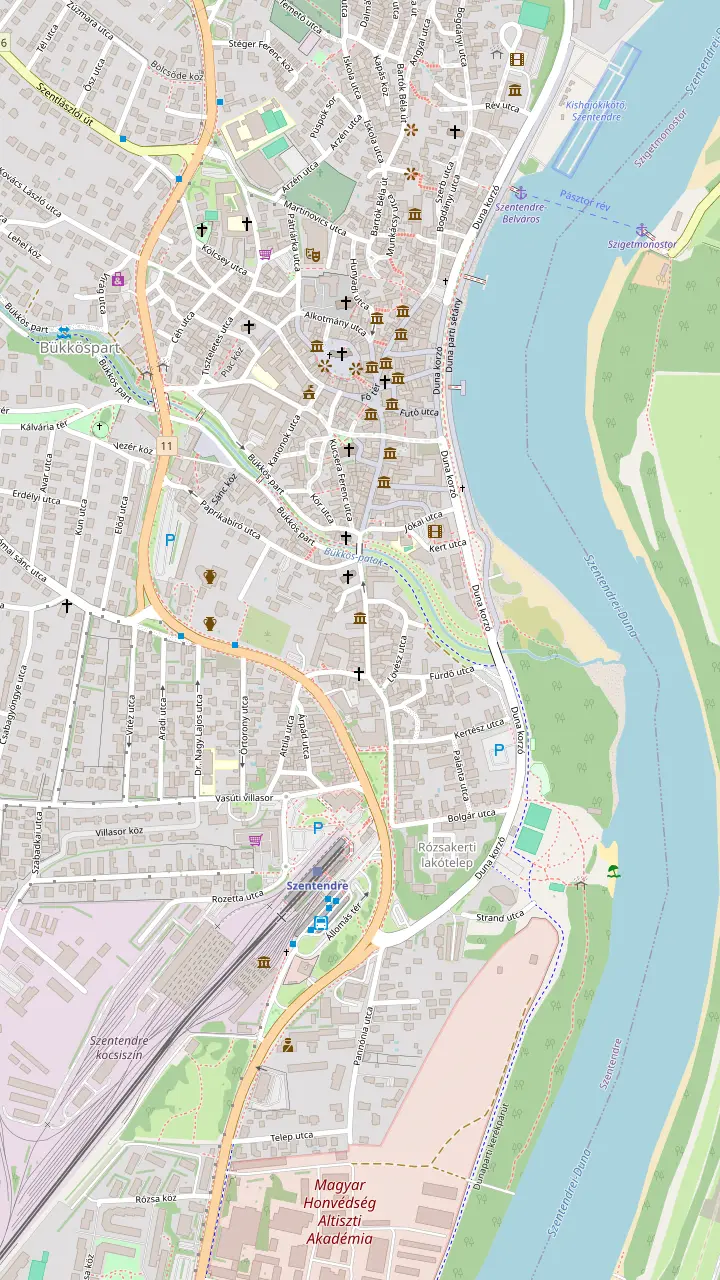
The triangular main square where the roads from Buda, Visegrád and the Pilis meet; the Merchants' Cross in the middle dates from 1763.
Google MapsThe Serbian Orthodox bishop's church, begun in 1762 and consecrated in 1764; closed in winter, entry fee.
Google MapsChurch Hill, with the town's oldest church and a stone sundial from the 1300s on its buttress.
Google MapsOver 300 works by the ceramic artist, on show since 1973; copies in the last room may be touched.
Google MapsA former 19th-century sawmill, opened to art in June 1999, with large temporary shows.
Google MapsThe museum centre in the 18th-century Pajor Mansion, renamed in 2016.
Google MapsThe suburban train from Batthyány tér in Budapest ends here.
Google MapsA designated Danube bathing site with a 2026 permit.
Google Maps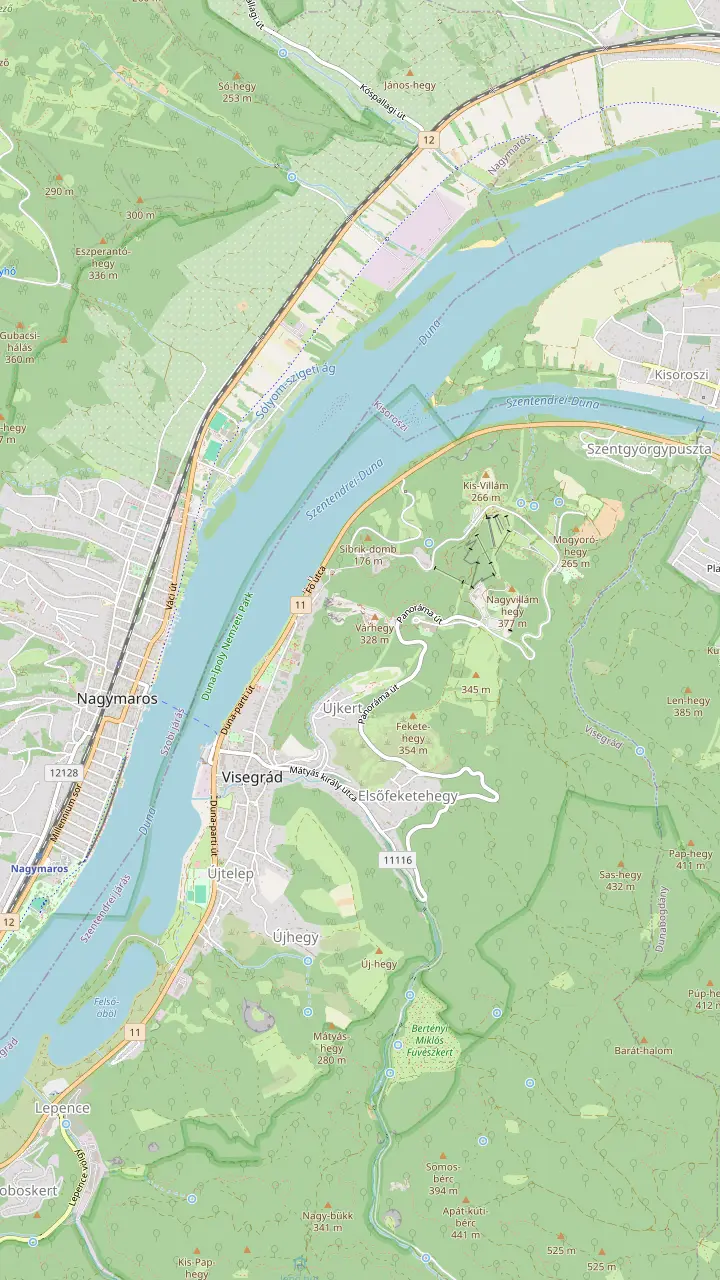
The hilltop castle with the Holy Crown exhibition; adult ticket HUF 2,800.
Google MapsThe palace of the Angevin kings below the castle; winter hours Tuesday to Sunday 8:00-16:00.
Google MapsThe 13th-century residential tower of the lower castle; the museum lists it as closed.
Google MapsRemains of a Roman camp of the 320s on a 176-metre hill.
Google MapsA 1933 lookout tower on the 378-metre Nagyvillám; adult ticket HUF 850.
Google MapsThe car ferry to Nagymaros and its railway station leaves from here.
Google Maps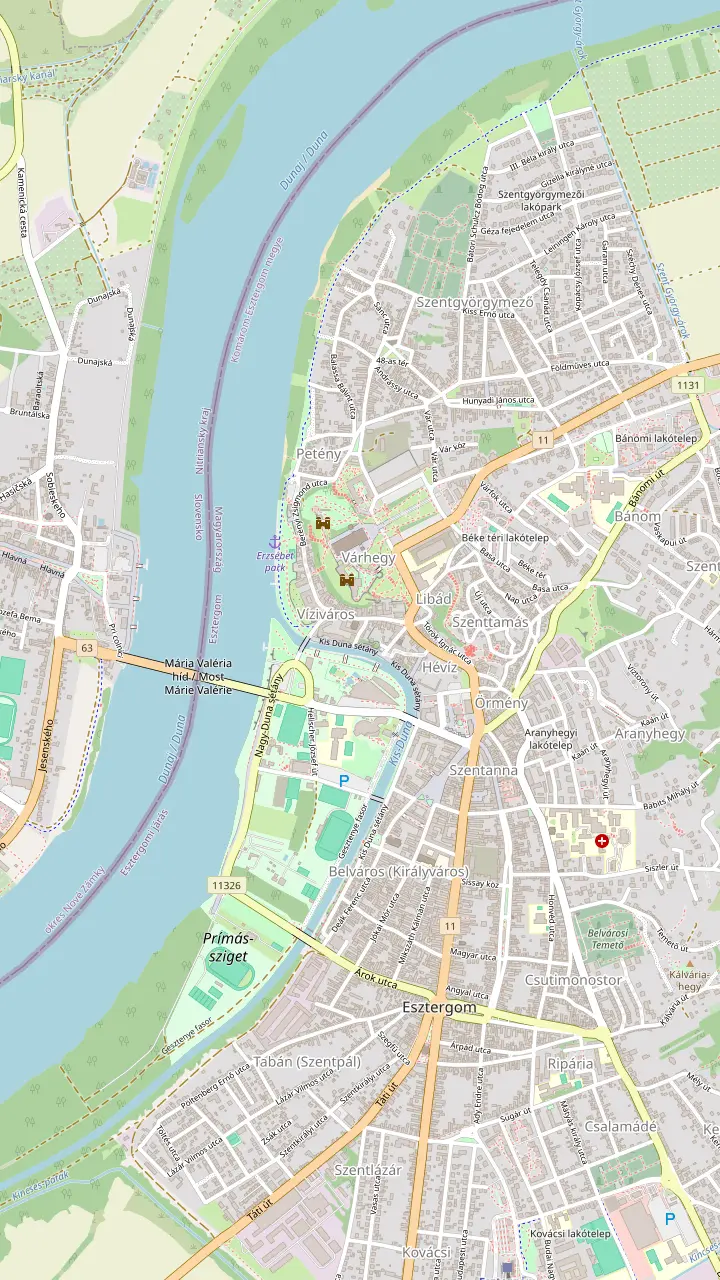
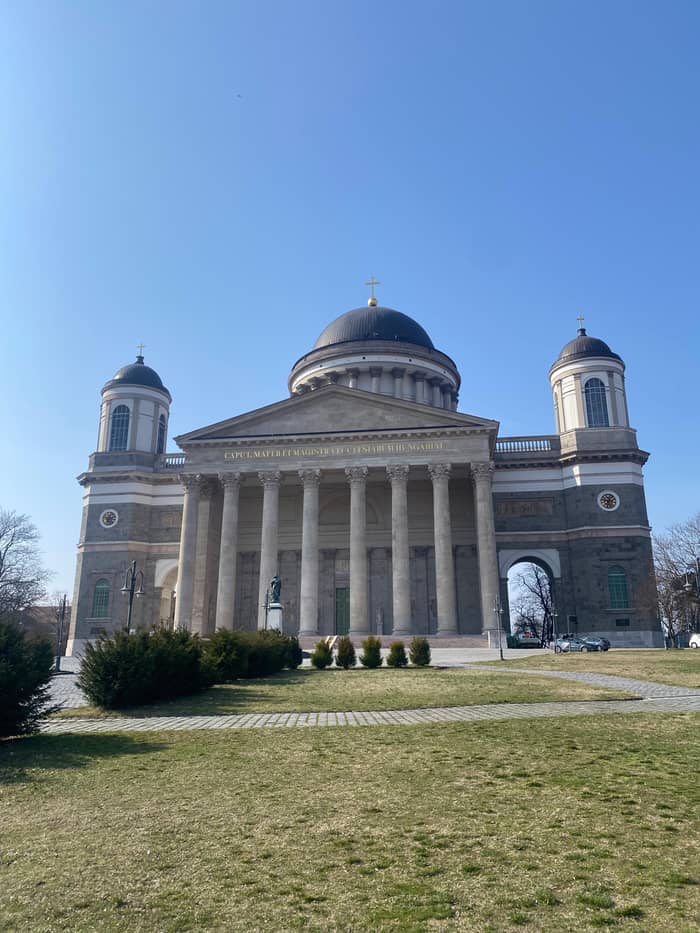
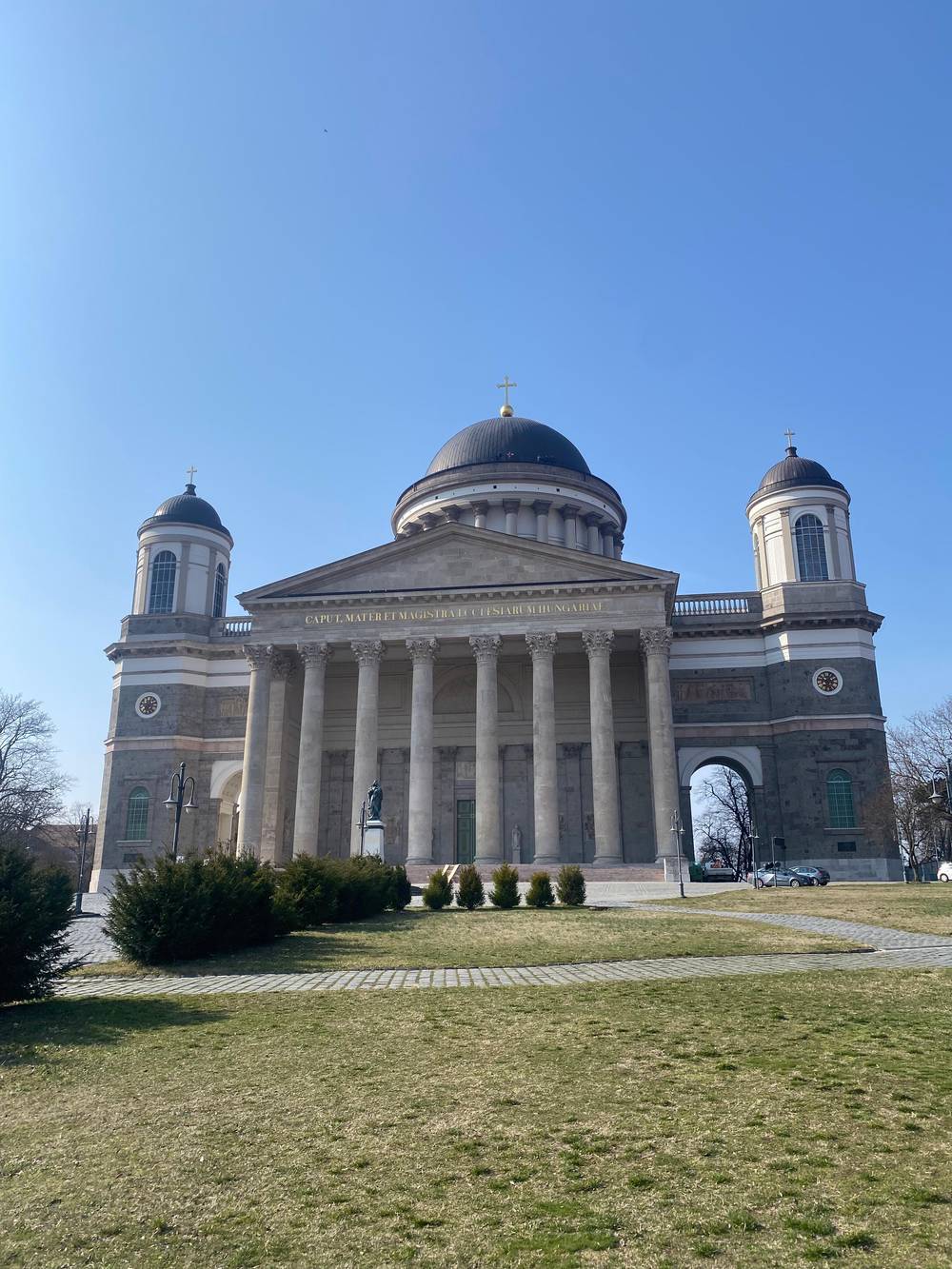
Hungary's largest church, 100 metres high; entering the church is free.
Google MapsThe royal castle museum next to the basilica, walls in places over 800 years old.
Google MapsThe bridge to Štúrovo in Slovakia, seen from the basilica's dome.
Google MapsOne of the largest church libraries in Hungary, completed in 1853 to plans by József Hild.
Google MapsThe water museum whose Vízeum exhibition won exhibition of the year in 2020.
Google MapsA promenade on maps since 1769, linking the Water Town with Castle Hill.
Google Maps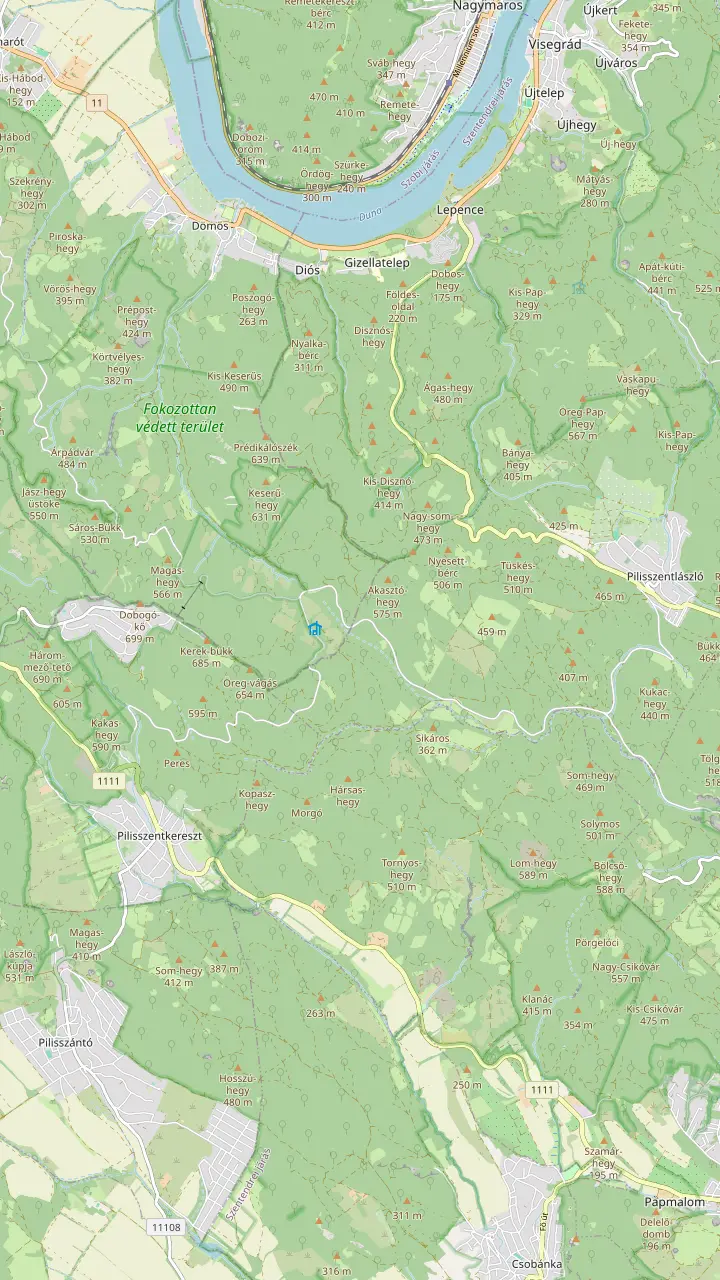
A 639-metre andesite rock, the tallest of the hills around Visegrád.
Google MapsVolcanic rock towers on the side of Prédikálószék, in a strictly protected zone: stay on the trail.
Google MapsA volcanic gorge with ladders, one-way uphill from Dömös; over 60,000 visitors a year.
Google MapsThe highest point of the Visegrád Hills, about 700 metres.
Google MapsA 7-metre lookout on the 587-metre Bölcső Hill, reached by an 800-metre steep path.
Google Maps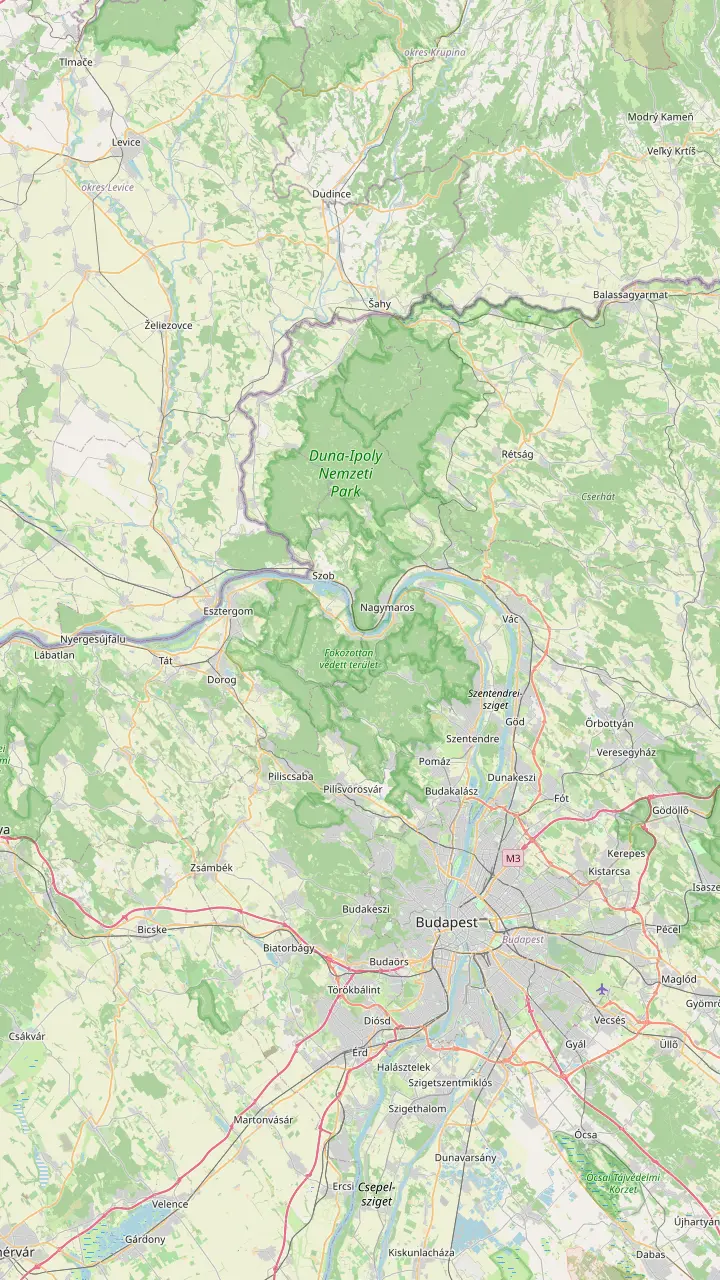
The open-air museum of village buildings, with almost 400 buildings; closed for winter from 2 November.
Google MapsThe oldest holiday resort of the Bend, 27 km north of Budapest.
Google MapsVillage with the Forgó beach, a designated bathing site in 2026.
Google MapsThe northern tip of Szentendre Island, with sand dunes and open beaches.
Google MapsStarting point for the Rám Gorge and the steeper path up Prédikálószék.
Google MapsAcross from Visegrád by ferry, with a designated beach on Hunyadi sétány.
Google MapsVillage of the painter István Szőnyi, whose house has been a museum since 1967.
Google MapsA train stop on the left bank with a designated Danube beach.
Google MapsA town with a Baroque main square, a cathedral and a riverside promenade.
Google MapsThe Slovak town across the Mária Valéria Bridge from Esztergom.
Google Maps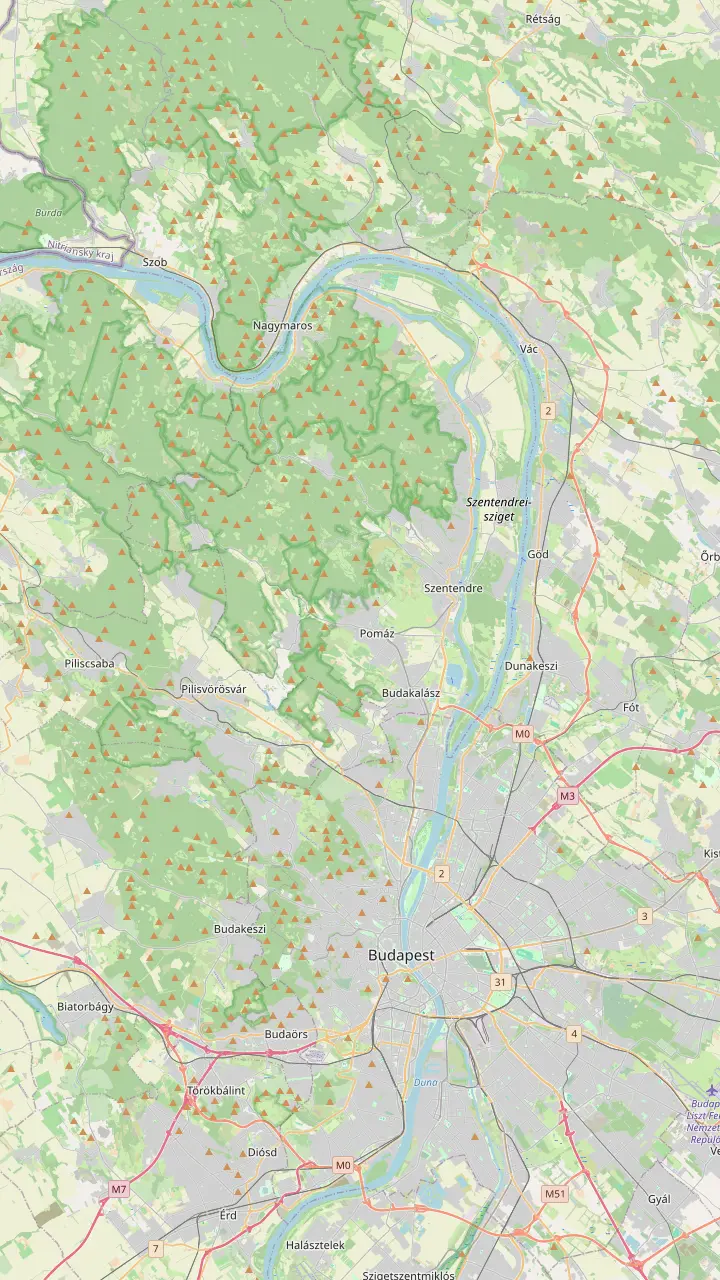
Start of the suburban train line to Szentendre.
Google MapsScheduled boats leave here for Visegrád between May and October.
Google MapsLong-distance buses to Visegrád leave from Árpád Bridge.
Google MapsTrain station on the left bank facing Visegrád, linked by ferry.
Google MapsMap © OpenStreetMap contributors
Szentendre on the Danube Bend is the town of Serbian steeples, painters and cobbled lanes. Here is what to see on the square, which churches open when, which museums repay the time and how long to stay.
Editorial team, danubebendtour.com · Updated November 8, 2026 · Allow 8 min
Summary view
Szentendre sits on the right bank of the Danube, some 22 to 25 km north of Budapest, where the river begins its long curve around the hills.1,2 It is the first stop for most people heading upstream, and the easiest of the Danube Bend cities to reach on your own. What makes it different is not its size but its texture: steep lanes, tiny houses leaning on each other and a skyline of Baroque steeples, all squeezed between the water and the hills.
That texture has a clear origin. The town's tourism office traces the Mediterranean look to Serbian, Dalmatian and Greek settlers who arrived in 1690 under Patriarch Arsenije III, after the Ottoman wars had emptied the region.3 They grew rich on vines and wine, crafts and trade, and they built a church for almost every community.8 Later vine disease slowed the town down, and it never industrialised and kept its Baroque centre intact.9
The second wave came with paint brushes. Károly Ferenczy settled here in 1890, and an artists' colony was founded in 1926.10,11 Today the Hungarian Tourism Agency says no other town in the country has as many museums and small galleries for its population.7 That mix of Orthodox churches, studios and cafés is why the town rewards a slow walk more than a checklist, and why it fills up on summer weekends.
Plan your visits
| Church | Built | When you can go in |
|---|---|---|
| Belgrade Cathedral | 1762-1764 | Most of the year, not in winter; fee |
| Blagovestenska | 1752 | Daily, April to September; fee |
| Preobrazhenska | from 1741 | Only on 19 August |
| Pozharevachka | consecrated 1763 | Only on themed walks |
| Church Hill parish church | 13th century roots | Check with the parish |
Dates and access as the Szentendre tourism office lists them.5,17,18,19,20,21,22,23,6
Every walk starts on Fő tér, the triangular main square. It has been the heart of the town since the Middle Ages because the roads from Buda, Visegrád and the Pilis hills meet here.14 In the middle stands the Merchants' Cross, which the Association of Serbian Merchants put up in 1763 to give thanks that a plague had passed the town by.4 Stand by the cross for a minute and look at the house fronts: almost every one has a date or a name worth asking about.
The long Serbian Commercial House at number 5 was put together in the 1720s from six narrow merchant houses under one roof.15,16 Shops sat below and living rooms above, and the town's art gallery has used the ground floor since 1978.16 Look at the other house fronts around the square too.
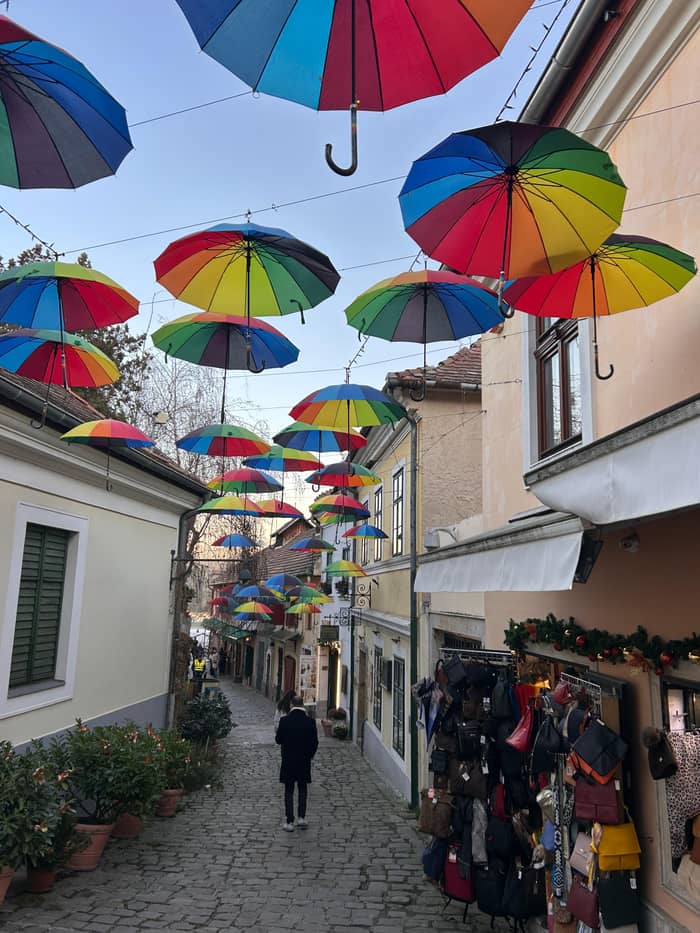
From the square, lanes run uphill to Church Hill and downhill to the Danube promenade. Take both. The upper lanes are quieter and give you the rooftop views, while the river side has the cafés and the souvenir stalls. Wear shoes with grip: the cobbles are uneven and slippery after rain. If you arrive with a group tour, ask your guide where the meeting point is before you split up, because the alleys soon start to look alike.
Time in town
Time on the ground in Szentendre as each listing states it; the half-day tours add a marzipan museum stop.
Szentendre's skyline belongs to its Orthodox churches, and they keep different hours, so plan around them. The Belgrade Cathedral, also called Saborna, is the bishop's church of the Serbian Orthodox diocese. It was begun in 1762 and consecrated in 1764.5 Inside, the icons of the tall iconostasis are by Vasa Ostojić, and the garden holds the Bishop's Palace and a collection of Serbian church art.27
The cathedral opens for most of the year but not in winter, and it charges an entry fee.17 On the main square, the Blagovestenska or Annunciation Church, known locally as the Greek church, was built in 1752 to designs by András Mayerhoffer, and its Rococo iconostasis was made in 1802-1803.18 It opens daily from April to September, also for a fee.19 If you visit in winter, plan to see these interiors through the door and spend your time in the museums instead.
Other churches are harder to enter. The Preobrazhenska Church, begun as a stone building in 1741, opens only on 19 August, when the Serbian festival fills its courtyard.20,21 The Pozharevachka Church, consecrated in 1763, can be seen only on the town's themed walks.22,23 Even closed, these churches are worth the detour for their gates, towers and courtyards, and they show how many separate communities once shared this small town.
Plan your visit
Your time and your interests decide where to spend it.
If I have a short stop on a tour
Fő tér, a church front, Church Hill
The town is the last stop for 80 minutes on the full-day tour.
If I love ceramics and painting
The Kovács Margit museum
More than 300 of her works are on show.24
If I travel with children
The Skanzen
If I want an Orthodox interior
The Belgrade Cathedral or Blagovestenska
Both charge a fee; the second opens daily April to September.17,19
If I am here in mid-August
Go on 19 August
The Preobrazhenska Church opens for the Serbian festival.21
Ways to see it
Site tour
Esztergom, Visegrád, Szentendre
Half day
Old town and marzipan
Summer boat
Old town, boat back
Climb the short lanes from Fő tér to Templom tér, the little square on Church Hill. The Catholic parish church up here is the oldest building in Szentendre, with roots in the 13th century, and on its south-western buttress you can find a sundial cut from one block of stone in the 1300s.6 Inside, the sanctuary frescos were painted between 1933 and 1938 by members of the artists' colony, who placed Bible scenes against the streets of their own town.69
Church Hill is also where Béla Czóbel's museum stands. The tourism office notes that Czóbel was the first Hungarian artist honoured with his own museum while he was still alive.70 Even if you skip the museum, the walls of the square are the place for the classic photo of red roofs, steeples and the Danube behind them. Late afternoon light is warmest here, and the square is quieter than the lanes below.
Come down by a different lane than the one you took up. The backstreets between Church Hill and Bogdányi utca are where the town still feels lived in: washing lines, cats on steps, small gardens behind iron gates. They also lead you towards the ArtMill and the river without passing every souvenir stall. Watch the clock when travelling with a tour group, because the walk down is quick but the detours are tempting.
Price your trip
Choose how many of you travel and see what each Szentendre option costs.
Compare 3 choices
Choose how many of you travel and see what each Szentendre option costs.
≈
View≈
View≈
ViewConverted at the ECB reference rate, from-prices as listed by GetYourGuide. The precise amount is shown when you book.
The town's story
1009
The name appears in the charter of the Veszprém bishopric.12
1690
Serbian, Dalmatian and Greek families rebuild the town.3
1763
Serbian merchants raise the Merchants' Cross.4
1890
Károly Ferenczy moves to Szentendre.10
1926
The colony is founded and shapes the town's art.11
1967
The Skanzen opens on the edge of town.13
With limited time, pick one museum, perhaps a second, and give each a proper look rather than racing through the whole list. The Kovács Margit Ceramic Museum is a favourite: it opened in 1973 with more than 300 works that the ceramic artist gave to the town in 1972.28,24 Her figures are warm, humorous and very tactile, and copies of her best-known pieces in the last room can be touched by blind and partially sighted visitors.28
For art on a bigger scale, the ArtMill fills a former 19th-century sawmill with temporary exhibitions; it opened to the public in June 1999 and the tourism office ranks it as the third most important exhibition space in Hungary.29 The Ferenczy Museum Centre, founded as a local history collection in 1951, now works from the 18th-century Pajor Mansion and took its current name in 2016.30 Its permanent rooms cover the painters who made Szentendre an art town.
Smaller stops suit a rainy hour. The National Wine Museum, opened in 1993, runs through a cellar system of about 650 square metres with a tasting street.71 The Micro Art Museum shows 15 tiny works by Mykola Syadrysty that can only be seen through microscopes.72 The art festival, Art Capital, often takes over public spaces and even the river itself, so check what is on before you go.73
Video
Stuffed Cabbage Adventures on YouTube · The video waits until you tap play to load.
nowhere else in the country is the number of museums and small galleries per capita so high
Before you go
On the edge of town lies the Skanzen, the Hungarian Open Air Museum, which the tourism agency calls the largest museum of its kind in the country.74 Founded in 1967, it brings together almost 400 rural buildings and around 80,000 objects, arranged as villages from different regions.25 Craftspeople, animals and working kitchens make it feel lived in, and children have their own activity points.
The grounds cover nearly 80 hectares, so the museum runs its own train on a 2.2-kilometre line, which it calls the longest standard-gauge museum railway in Europe.75,26 Plan at least half a day: the Skanzen is not a quick add-on to an old-town walk, and a coach tour that gives Szentendre about 80 minutes leaves no room for it. Visit it on a separate day, or stay overnight in Szentendre and combine both.
Check the season before you set out. The museum closed for its winter break on 2 November 2026 and reopens in spring 2027, apart from a couple of special November weekends.31 In the warm months it makes an easy family day out from Budapest, with space to run, animals to meet, craft demonstrations to watch and enough shade under the orchards and barns to keep a summer afternoon comfortable.
How much time does Szentendre need? For the main square, a church interior, Church Hill and one museum, a relaxed morning is comfortable; add the Skanzen and you need most of a day. On the Danube Bend and Szentendre tour sold on this site, the town is the final stop, with 80 minutes for a guided walk and free time before the 1-hour transfer back to Budapest. That is enough for the square, the churches from outside and a coffee.
If you only want Szentendre, a half-day coach tour spends 1.5 hours in town and 30 minutes at the Szamos Marzipan Museum, and takes 4 hours in total. Another half-day tour gives the town 100 minutes and returns by boat on summer Fridays to Sundays between 21 May and 10 September. Doing it yourself is simple too: the suburban train runs from Batthyány tér in Budapest to Szentendre.32
Drivers should know that parking in Szentendre is charged every day from 9:00 AM to 8:00 PM and that coaches cannot enter the centre.68 Cyclists can follow the riverside path north from Budapest's Római beach.76 In summer you can even swim: the Postás beach in Szentendre is on the 2026 list of permitted bathing sites.33 Whatever you choose, go early or late in the day; the lanes are at their best when the tour groups have gone.
FAQ
Serbian, Dalmatian and Greek settlers led by Patriarch Arsenije III came in 1690 and built their own churches.3
The tourism office says it opens nearly all year except winter, with an entry fee.17
The full-day tour sold here gives Szentendre 80 minutes with a guided walk and free time.
The open-air museum took its winter break from 2 November 2026 and reopens in spring 2027.31
The local train runs between Batthyány tér in Budapest and Szentendre.32
Its history goes back to the 13th century, and a stone sundial from the 1300s sits on its buttress.6
Sources
Planning a day up the river? Ask a real person here.