Site tour
Full Bend day
Lunch stop in Visegrád
- Length9.5 hours
- In Visegrád105 minutes
- Lunch3 courses
Choose your stop
Check out 39 stops
Start by picking a route; tap a pin or stop for its note and Google Maps.
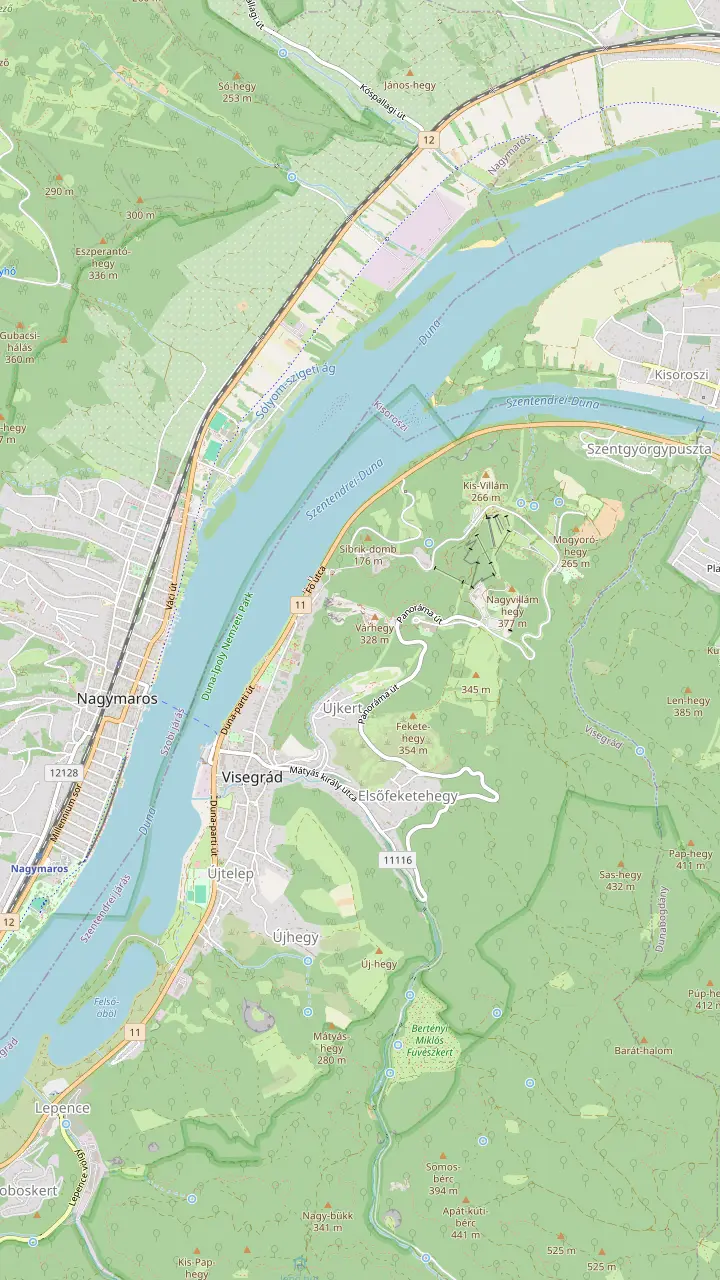
The hilltop castle with the Holy Crown exhibition; adult ticket HUF 2,800.
Google MapsThe palace of the Angevin kings below the castle; winter hours Tuesday to Sunday 8:00-16:00.
Google MapsThe 13th-century residential tower of the lower castle; the museum lists it as closed.
Google MapsRemains of a Roman camp of the 320s on a 176-metre hill.
Google MapsA 1933 lookout tower on the 378-metre Nagyvillám; adult ticket HUF 850.
Google MapsThe car ferry to Nagymaros and its railway station leaves from here.
Google Maps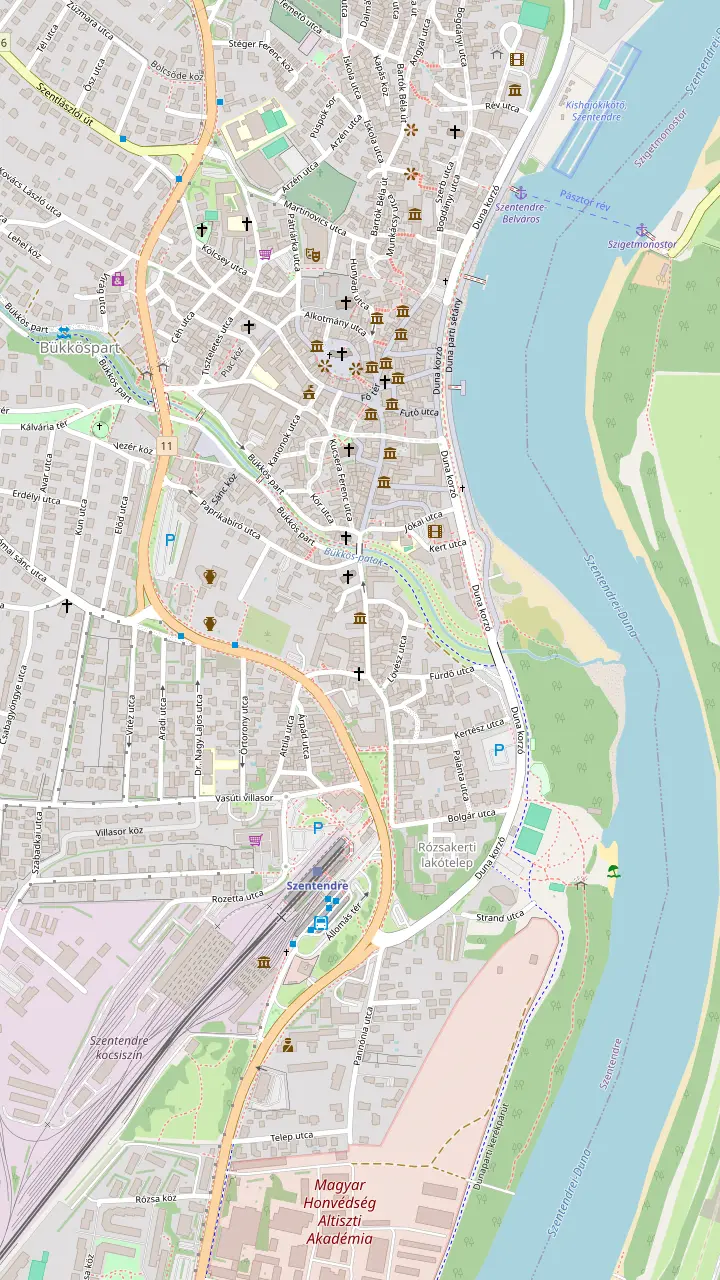
The triangular main square where the roads from Buda, Visegrád and the Pilis meet; the Merchants' Cross in the middle dates from 1763.
Google MapsThe Serbian Orthodox bishop's church, begun in 1762 and consecrated in 1764; closed in winter, entry fee.
Google MapsChurch Hill, with the town's oldest church and a stone sundial from the 1300s on its buttress.
Google MapsOver 300 works by the ceramic artist, on show since 1973; copies in the last room may be touched.
Google MapsA former 19th-century sawmill, opened to art in June 1999, with large temporary shows.
Google MapsThe museum centre in the 18th-century Pajor Mansion, renamed in 2016.
Google MapsThe suburban train from Batthyány tér in Budapest ends here.
Google MapsA designated Danube bathing site with a 2026 permit.
Google Maps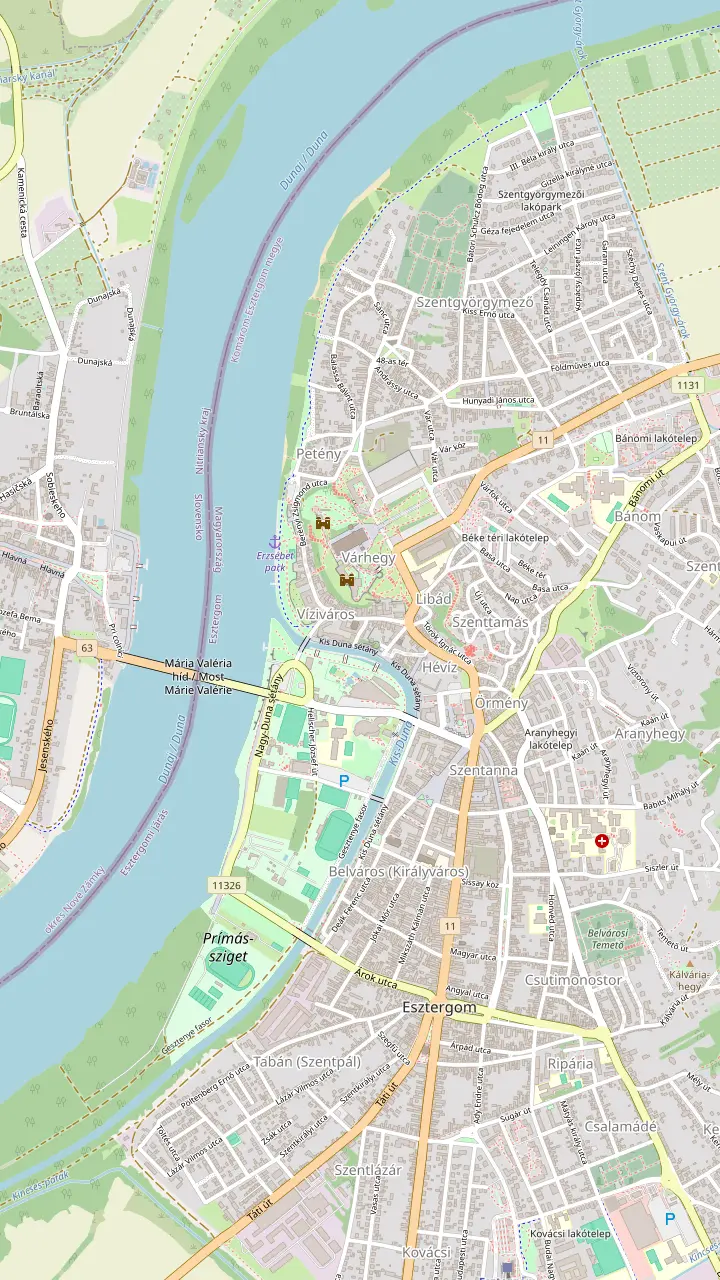
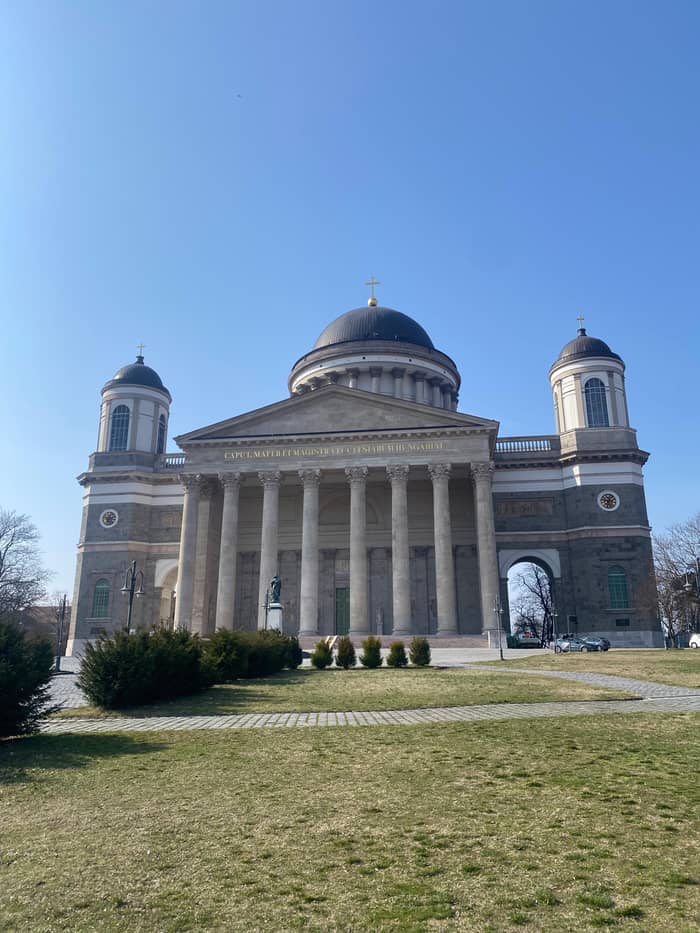
Hungary's largest church, 100 metres high; entering the church is free.
Google MapsThe royal castle museum next to the basilica, walls in places over 800 years old.
Google MapsThe bridge to Štúrovo in Slovakia, seen from the basilica's dome.
Google MapsOne of the largest church libraries in Hungary, completed in 1853 to plans by József Hild.
Google MapsThe water museum whose Vízeum exhibition won exhibition of the year in 2020.
Google MapsA promenade on maps since 1769, linking the Water Town with Castle Hill.
Google Maps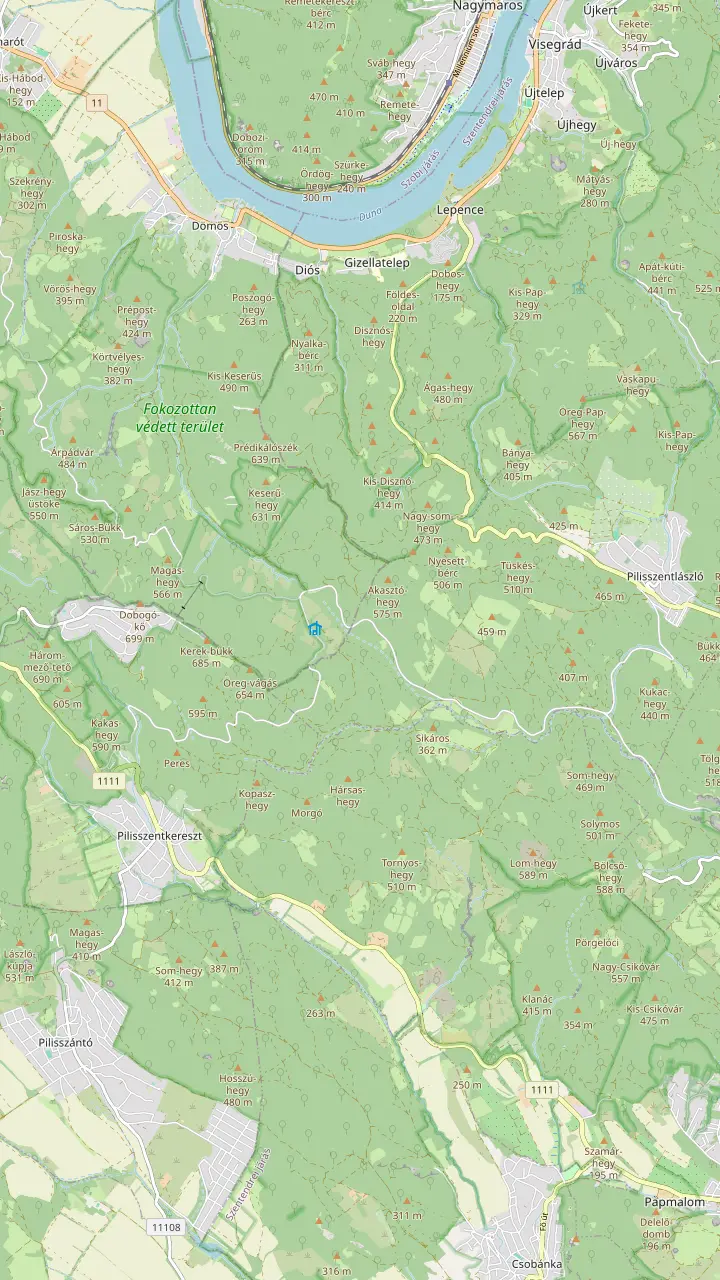
A 639-metre andesite rock, the tallest of the hills around Visegrád.
Google MapsVolcanic rock towers on the side of Prédikálószék, in a strictly protected zone: stay on the trail.
Google MapsA volcanic gorge with ladders, one-way uphill from Dömös; over 60,000 visitors a year.
Google MapsThe highest point of the Visegrád Hills, about 700 metres.
Google MapsA 7-metre lookout on the 587-metre Bölcső Hill, reached by an 800-metre steep path.
Google Maps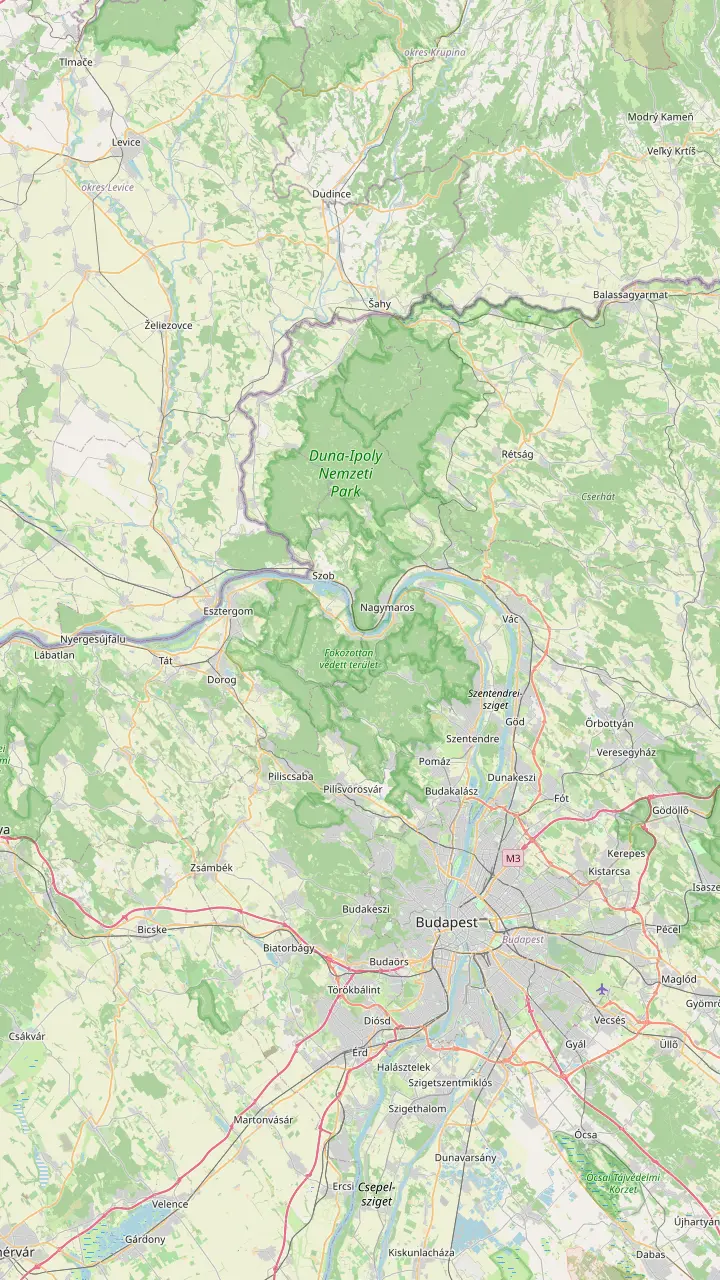
The open-air museum of village buildings, with almost 400 buildings; closed for winter from 2 November.
Google MapsThe oldest holiday resort of the Bend, 27 km north of Budapest.
Google MapsVillage with the Forgó beach, a designated bathing site in 2026.
Google MapsThe northern tip of Szentendre Island, with sand dunes and open beaches.
Google MapsStarting point for the Rám Gorge and the steeper path up Prédikálószék.
Google MapsAcross from Visegrád by ferry, with a designated beach on Hunyadi sétány.
Google MapsVillage of the painter István Szőnyi, whose house has been a museum since 1967.
Google MapsA train stop on the left bank with a designated Danube beach.
Google MapsA town with a Baroque main square, a cathedral and a riverside promenade.
Google MapsThe Slovak town across the Mária Valéria Bridge from Esztergom.
Google Maps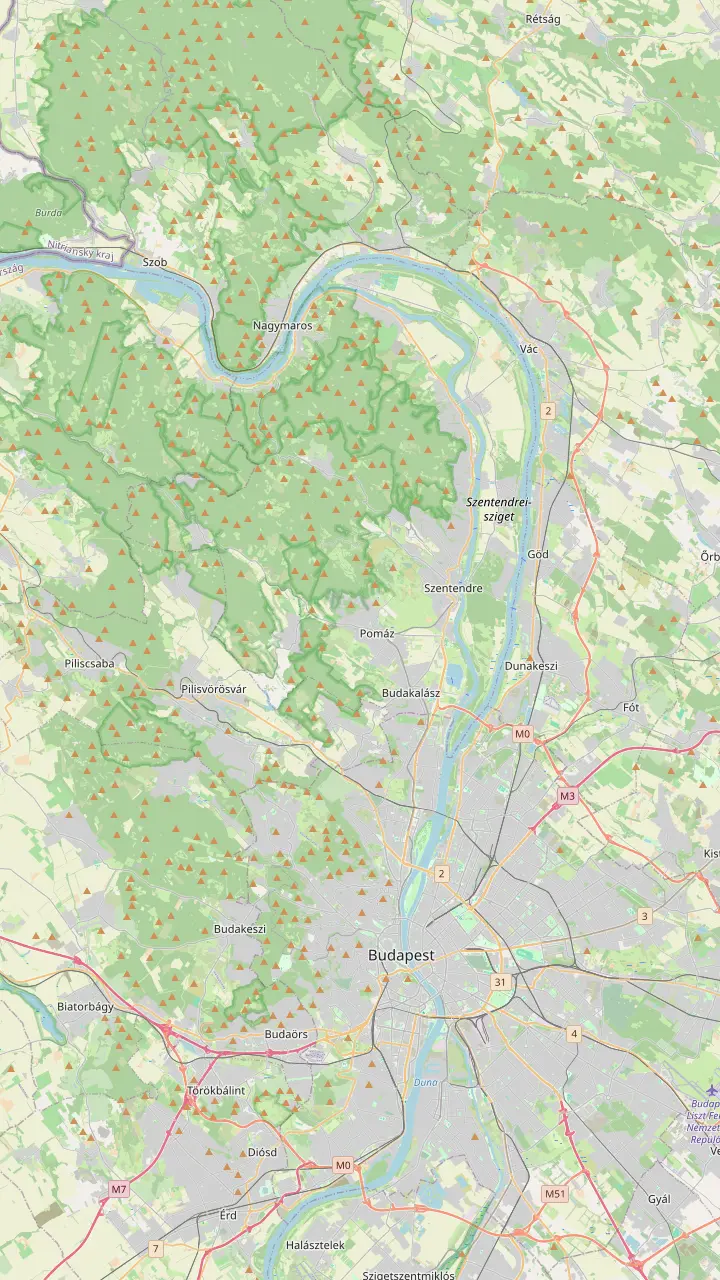
Start of the suburban train line to Szentendre.
Google MapsScheduled boats leave here for Visegrád between May and October.
Google MapsLong-distance buses to Visegrád leave from Árpád Bridge.
Google MapsTrain station on the left bank facing Visegrád, linked by ferry.
Google MapsMap © OpenStreetMap contributors
Visegrád on the Danube Bend was a medieval royal seat, and its castle still watches the river from a steep hill. Here is the Citadel, the palace below it, the stories, the hours and the way up.
Editorial team, danubebendtour.com · Updated November 8, 2026 · Allow 8 min
Summary view
Visegrád lies just over 40 km north of Budapest, at the point where the Danube squeezes between steep wooded hills before turning south.1 Today it is a village-sized town of guesthouses and riverside restaurants, but for much of the 14th century it was where Hungary was ruled from. Charles I of the Angevin dynasty moved his seat here in 1323 and founded the palace below the castle.4
The royal seat stayed in Visegrád until about 1410, and the town remained an important country residence for later kings.7 King Louis I, who built the palace into its final form, was born here, and 2026 marks 700 years since his birth.8 Under Matthias Hunyadi the castle and palace had a last golden age, when Italian Renaissance masters worked on the site.9,10 Walking from the palace up to the castle, you move through each of those reigns in turn.
The ruins are only part of the attraction. The view from the top is the reason most people climb, and the tourism agency calls the panorama from the Citadel one of the most famous in Hungary.11 On a clear morning you can follow the river from the bend itself to the islands downstream, with Nagymaros and the Börzsöny filling the far bank. The town pairs that view with real history you can stand inside, which is why the day tour on this site builds its lunch stop here.
Plan your visit
| Sight | When it opens | Adult ticket |
|---|---|---|
| Citadel | Daily 9.00-18.00, April to September | HUF 2,800 |
| Royal Palace | Tue-Sun 8:00-16:00 in winter | See the museum |
| Solomon Tower | Closed from 1 September 2026 | Closed |
| Zsitvay lookout | Tue-Fri 11:00-16:00, weekends 10:00-17:00 | HUF 850 |
Hours and prices as the Citadel's operator, the King Matthias Museum and Pilis Park Forest publish them; winter hours differ.18,3,23,24,25,26
The castle you see on the summit is not the first one here. After the Mongol invasion destroyed an older fort, King Béla IV and Queen Maria Laskaris built a double castle system around 1250-1260, paying for it from the queen's dowry.2 The Citadel stands on a hill 328 metres high, linked by walls to a lower castle and a water bastion on the river.14 When people look up a Danube Bend castle, this is the one the photos show.
Long wooden stairs lead up through the gates to the halls, which hold exhibitions on the life of the medieval court.15 The forestry company that runs the Citadel lists a Holy Crown exhibition, a castle history display, a waxworks of the 1335 royal meeting and a hall of medieval weapons.16 The rooms are compact, so an hour is a fair allowance for most visitors, though history fans will happily stay longer with the weapons and the crown story.
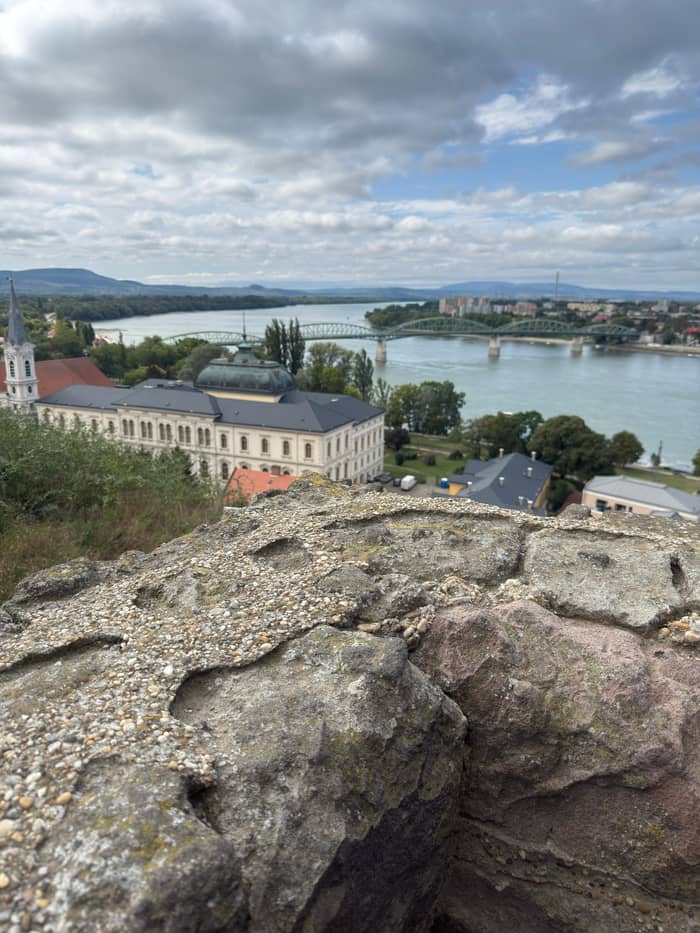
Leave time for the terrace. From the courtyard and walls you look straight down on the town and the river bending around Nagymaros on the far bank, and the tourism agency says the whole Bend is visible from the top.17 The best light is in the late afternoon, when the sun is behind you and the hills across the water turn gold. Bring a layer: the hilltop catches the wind even on warm days.
Visegrád kept the Holy Crown of Hungary for long periods, and it remained a keeper of the crown until 1529.13 In 1335 Charles I hosted King John of Bohemia and King Casimir of Poland here for a summit on trade and alliance.5 That meeting is why today's regional alliance of Poland, Czechia, Slovakia and Hungary carries the Visegrád name.28 A meeting of rulers held in this small castle town still echoes in the politics of central Europe.
The castle's most famous story is a robbery. In 1440 Kottaner Jánosné, a lady-in-waiting to the widowed Queen Elisabeth, broke into the treasury, filed through the locks and carried the crown out hidden in a red velvet cushion.6 A copy of the crown is shown in the Holy Crown exhibition in the Citadel today, so you can see what all the fuss was about.
Decline came with the Ottoman wars. The castle fell to Ottoman forces in 1544 and decayed into ruins afterwards.13 Restoration began in the early 1870s and has never really stopped, which is why some walls look freshly rebuilt next to others that are clearly medieval.29 Read the panels on the walls to tell which is which.
Choose your visit
Match the stop to what you want from the castle.
If I want the view and a good lunch
The full-day coach tour
105 minutes with a 3-course lunch and photo stop.
If I want to explore the Citadel inside
A boat day with 5 hours ashore
Time for the castle, palace and town.
If I like to earn my view
The guided hike to the castle
80 minutes uphill from Szentgyörgypuszta.
If I am visiting in July
Go for the Palace Games
Tournaments and a royal procession.27
If I am here on a winter Monday
Skip the palace that day
Winter exhibitions open Tuesday to Sunday.23
Ways to visit
Site tour
Lunch stop in Visegrád
By river
Boat there and back
On foot
Walk up from the woods
Down at river level, the royal palace was founded by Charles I and built by his son Louis I into the form whose ruins you walk through today.4 Sigismund of Luxembourg finished the building work, and once King Matthias had wed Beatrix, he invited Renaissance artists from Italy to decorate it.10 The fountains, loggia and rebuilt courtyards are the easiest place on the site to imagine court life in full swing.
The palace is run by the King Matthias Museum of the Hungarian National Museum. From 1 November 2026 to 28 February 2027 its exhibitions open Tuesday to Sunday, 8:00 to 16:00, so Monday visits are out; the museum's own hours page gives the same 8 to 16 window with the last entry at 15:45.23,71 Check that page before you plan an early or late visit. Allow at least an hour for the courtyards, the reconstructed rooms and the garden, and more if you like reading every panel.
Between the palace and the Citadel stands Solomon Tower, the great 13th-century residential tower of the lower castle.43 Its main entrance was on the first floor, and the sixth level carried a battlemented roof terrace.43,72 The lower castle and its walls controlled both the road between Buda and Esztergom and the shipping on the Danube.73 From 1 September 2026 the museum lists the tower as closed, with reopening expected in spring 2027, so plan to see it from outside.74,24
Price your day
Enter your party size to compare the coach, the boat and the castle hike.
Compare 3 choices
Enter your party size to compare the coach, the boat and the castle hike.
≈
View≈
View≈
ViewConverted at the ECB reference rate, from-prices as listed by GetYourGuide. The precise amount is shown when you book.
Visegrád through the centuries
320s
A fort of the frontier rises on Sibrik Hill.12
1250-1260
Béla IV and Queen Maria build the double castle.2
1323
Charles I moves the court to Visegrád.4
1335
Bohemian and Polish kings meet here.5
1440
A lady-in-waiting smuggles it out.6
1544
The castle falls and decays.13
You can reach the Citadel on foot, by car on the panorama road, or by the seasonal bus. Walkers climb steep paths from the town; it is a proper uphill hike, so allow time and water. Drivers take the panorama road, whose route Pilis Park Forest credits to forest engineers Károly Szabó and Zoltán Luttonszky and calls the most beautiful in the country.75 The Citadel car park charges HUF 900 per 2 hours for a car.76
In the 2025 season a shuttle bus ran from the ferry stop up the hill only on Saturdays, Sundays and public holidays, stopping at the Citadel, the bobsled track and Mogyoróhegy.77,70 Check the forestry company's page for the current timetable before relying on it, and outside the season count on walking or driving. Above the Citadel, a 700-metre summer and winter bobsled track runs beside the Zsitvay viewpoint on Nagyvillám.78
Higher still, Nagyvillám, a 378-metre summit, carries the Zsitvay lookout, whose tower dates from 1933.44 Our viewpoints guide covers it in detail; in short, Monday is its day off and grown-ups pay HUF 850 to climb it.25,26 Leave the car below and the stroll up takes about 10 minutes.79 Combine it with the Citadel in one visit to the hill.
Video
Stuffed Cabbage Adventures on YouTube · The video waits until you tap play to load.
The view of the Danube Bend from the Citadel is one of Hungary’s most famous and spectacular panoramas.
Before you climb
Visegrád was a frontier long before it was a royal seat. On Sibrik Hill, 176 metres high, you can see the remains of a Roman camp of the frontier line that protected the province of Pannonia; it was built in the 320s under Constantine I.12 Later, St Stephen set up a county centre on the same hill, and the town's first church was built beside it before 1009.80 The excavated walls are low, so come for the sense of place and the view down the valley rather than for standing ruins.
The hills around the Danube Bend area explain the castle's position. The national park directorate describes how the river forced a gap through the volcanic hills in the early Ice Age and kept cutting into the hard volcanic rock for nearly 1.5 million years.81 Nagy-Villám, Kis-Villám and Castle Hill itself are remnants of old river terraces.82 Whoever held the hill controlled the river.
That geography also makes Visegrád a good base for walkers. The Zsitvay lookout is about an hour on foot from the town on marked trails, and the forests behind the Citadel are full of paths.79 If you only have the tour stop, look across to the Börzsöny peaks on the far bank and you will understand why the river had to bend: there was simply no other way through. Morning mist often hangs in the valley, so an early walk rewards you with layered hills and a quiet river.
On the coach day this site sells, Visegrád is the middle stop. The coach drives 40 minutes from Esztergom and then spends 105 minutes here, with a 3-course Hungarian lunch, a photo stop and the views. It is a meal and a panorama rather than a castle visit, so if the Citadel interior matters to you, choose a slower option. Ask the guide whether your group drives up to the hilltop viewpoint, because routes vary with the season and the traffic.
Boat lovers can take the full-day cruise from Budapest, which allows 5 hours in Visegrád and lasts 10.5 hours in total. Scheduled boats to Visegrád run between May and October from Vigadó tér in Budapest.68 Hikers can join a guided walk that climbs from Szentgyörgypuszta to the castle in 80 minutes and spends an hour at the top. There is also a ferry across to Nagymaros and its railway station.45
Time your visit for the Visegrád International Palace Games if you like pageantry. The festival takes place on the second weekend of July to remember the 1335 summit, with tournaments, a royal procession, a torchlit parade and a fair.27 The museum gives 10 to 12 July as its 2026 dates.83 In winter, check opening days carefully: from 11 January to 28 February the Citadel opens only Friday to Sunday.21
FAQ
The tourism agency puts Visegrád just over 40 km north of Budapest.1
On the price list valid from 1 January 2024, students and pensioners pay HUF 1,400; children up to 6 and over-70s go free.3
The full-day tour stops here for lunch, a photo stop and the views.
The museum gives 10 to 12 July as the 2026 dates.83
Sources
Planning a day up the river? Ask a real person here.